Architecture en Couches
⬇️ Télécharger cette page en Markdown
Vue d'Ensemble
Urbafix utilise une architecture en 4 couches distinctes :
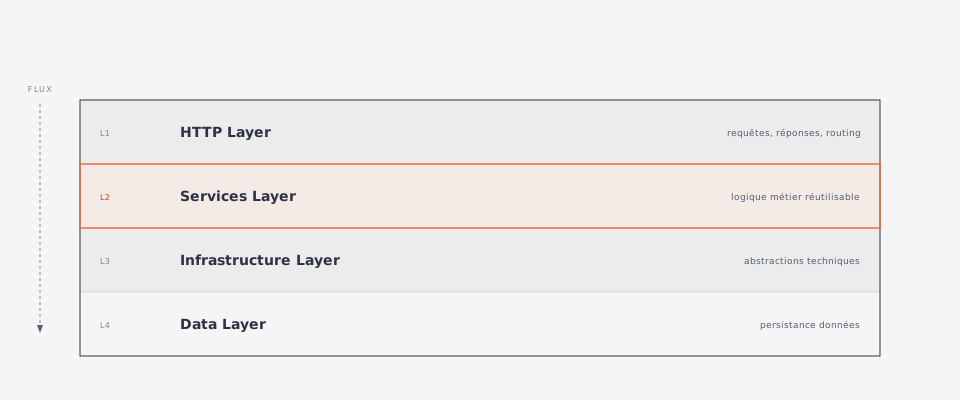
Couche 1 : HTTP Layer
Rôle
Gestion des requêtes HTTP, validation inputs, formatage réponses.
Composants
API Publique (/public/backend/api/) :
- get_types.php
- get_incidents.php
- submit_incident.php
- get_user_incidents.php
Admin Controllers (/public/backend/) :
- index.php (dashboard)
- incidents.php
- types.php
- services.php
- users.php
Responsabilités
-
Validation inputs :
-
Authentification :
-
Appel Services Layer :
-
Formatage réponse :
Couche 2 : Services Layer
Rôle
Encapsulation de la logique métier, réutilisabilité, testabilité.
Services Principaux
IncidentService :
- createIncident()
- listIncidents()
- updateStatus()
- getById()
TypeService :
- getByMairieId()
- getContacts()
- isActive()
UploadService :
- handlePhotos()
- handleVideos()
- validateGPS()
MairieService :
- getByCodePostal()
- getById()
FaceBlurringService :
- detectFaces()
- applyBlur()
Exemple : IncidentService
class IncidentService {
    private $db;
    private $cache;

    public function listIncidents($filters, $typeIds = null) {
        $sql = "SELECT * FROM incidents WHERE mairie_id = ?";
        $params = [$filters['mairie_id']];

        if ($typeIds !== null) {
            $placeholders = implode(',', array_fill(0, count($typeIds), '?'));
            $sql .= " AND type_id IN ($placeholders)";
            $params = array_merge($params, $typeIds);
        }

        if (!empty($filters['statut'])) {
            $sql .= " AND statut = ?";
            $params[] = $filters['statut'];
        }

        return $this->db->fetchAll($sql, $params);
    }
}
Couche 3 : Infrastructure Layer
Rôle
Abstractions techniques pour découpler l'infrastructure de la logique métier.
Interfaces
SessionInterface :
interface SessionInterface {
    public function start(): bool;
    public function get(string $key): mixed;
    public function set(string $key, $value): void;
    public function destroy(): bool;
}
StorageInterface :
interface StorageInterface {
    public function put(string $path, string $data): bool;
    public function get(string $path): string;
    public function exists(string $path): bool;
    public function delete(string $path): bool;
    public function url(string $path): string;
}
CacheInterface :
interface CacheInterface {
    public function get(string $key): mixed;
    public function set(string $key, $value, int $ttl): bool;
    public function remember(string $key, int $ttl, callable $callback): mixed;
    public function forget(string $key): bool;
}
QueueInterface :
interface QueueInterface {
    public function push(string $jobClass, array $data): void;
    public function pop(): ?array;
}
Factories
SessionFactory :
class SessionFactory {
    public static function create(): SessionInterface {
        $driver = Config::getInstance()->get('session.driver');
        return match($driver) {
            'redis' => new RedisSessionHandler(),
            'file' => new FileSessionHandler(),
            default => new FileSessionHandler()
        };
    }
}
Couche 4 : Data Layer
Rôle
Persistance des données, transactions, intégrité.
Composants
Database Singleton :
class Database {
    private static $instance = null;
    private $pdo;

    public static function getInstance(): Database {
        if (self::$instance === null) {
            self::$instance = new Database();
        }
        return self::$instance;
    }

    public function fetchAll(string $sql, array $params = []): array {
        $stmt = $this->pdo->prepare($sql);
        $stmt->execute($params);
        return $stmt->fetchAll(PDO::FETCH_ASSOC);
    }
}
Redis Client :
class RedisClient {
    private $redis;

    public function __construct() {
        $this->redis = new Redis();
        $this->redis->connect(
            Config::getInstance()->get('redis.host'),
            Config::getInstance()->get('redis.port')
        );
        $this->redis->auth(Config::getInstance()->get('redis.password'));
    }

    public function get($key) {
        return $this->redis->get($key);
    }
}
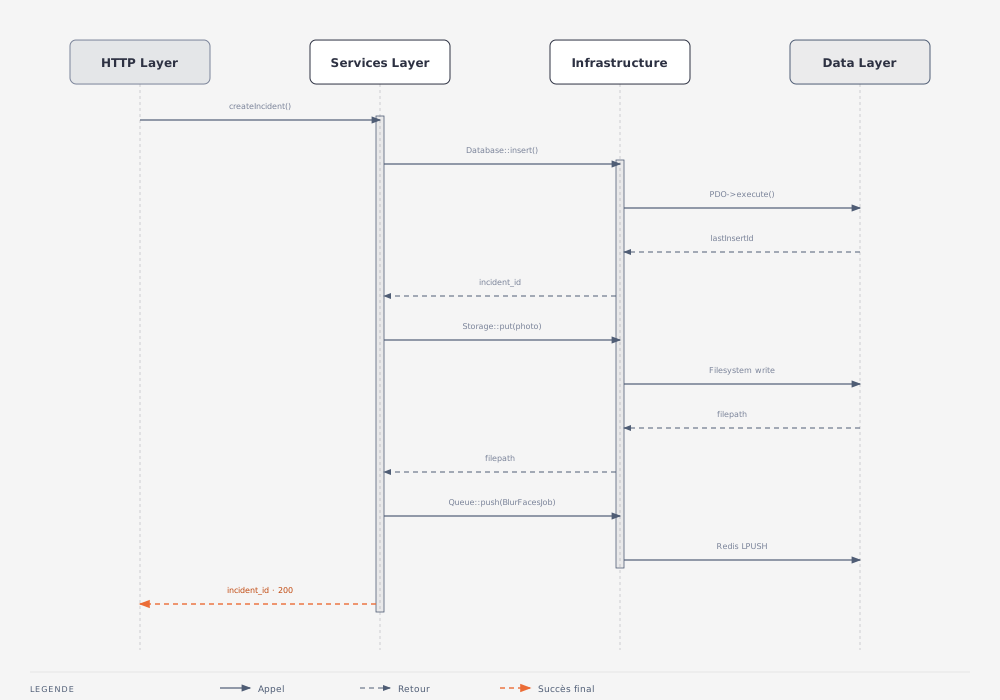
Flux de Données Entre Couches
Création Incident
Principes d'Architecture
Separation of Concerns
Chaque couche a une responsabilité unique : - HTTP : Communication - Services : Logique métier - Infrastructure : Abstractions techniques - Data : Persistance
Dependency Inversion
Les couches hautes ne dépendent pas des couches basses :
// ✅ Service dépend d'interface
class IncidentService {
    public function __construct(
        Database $db,
        CacheInterface $cache,  // Interface, pas implémentation
        StorageInterface $storage
    ) {}
}

// ❌ Service dépend d'implémentation concrète
class IncidentService {
    public function __construct(
        Database $db,
        RedisCache $cache,  // Couplage fort
        LocalStorage $storage
    ) {}
}
Testabilité
Les interfaces permettent le mock :
// Test unitaire
$mockCache = $this->createMock(CacheInterface::class);
$mockCache->method('remember')->willReturn($fakeData);

$service = new IncidentService($db, $mockCache, $storage);
$result = $service->listIncidents($filters);

$this->assertEquals($fakeData, $result);
Avantages de l'Architecture
Scalabilité
Changement d'infrastructure sans modification métier :
# Dev : File sessions, no cache
SESSION_DRIVER=file
CACHE_DRIVER=null

# Prod : Redis sessions + cache
SESSION_DRIVER=redis
CACHE_DRIVER=redis
Maintenabilité
Code organisé, responsabilités claires, réutilisable :
// Réutilisation IncidentService dans plusieurs endpoints
// /api/get_incidents.php
$service->listIncidents($filters);

// /api/get_user_incidents.php
$service->listIncidents(['citoyen_id' => $citoyenId]);

// /backend/incidents.php
$service->listIncidents($filters, $accessibleTypeIds);
Testabilité
Chaque couche testable isolément : - HTTP : Tests d'intégration (curl) - Services : Tests unitaires (PHPUnit) - Infrastructure : Tests d'interface - Data : Tests base de données
Anti-Patterns Évités
Dieu Objet
❌ Avant : submit_incident.php (500+ lignes, tout dans un fichier)
✅ Après : - HTTP layer : 50 lignes (validation, routing) - Services : 200 lignes (métier réutilisable) - Infrastructure : 300 lignes (abstractions)
Couplage Fort
❌ Avant : $_SESSION hardcodé partout
✅ Après : SessionInterface injectable
Logique Dupliquée
❌ Avant : Validation GPS répétée dans 3 fichiers
✅ Après : UploadService::validateGPS() unique